

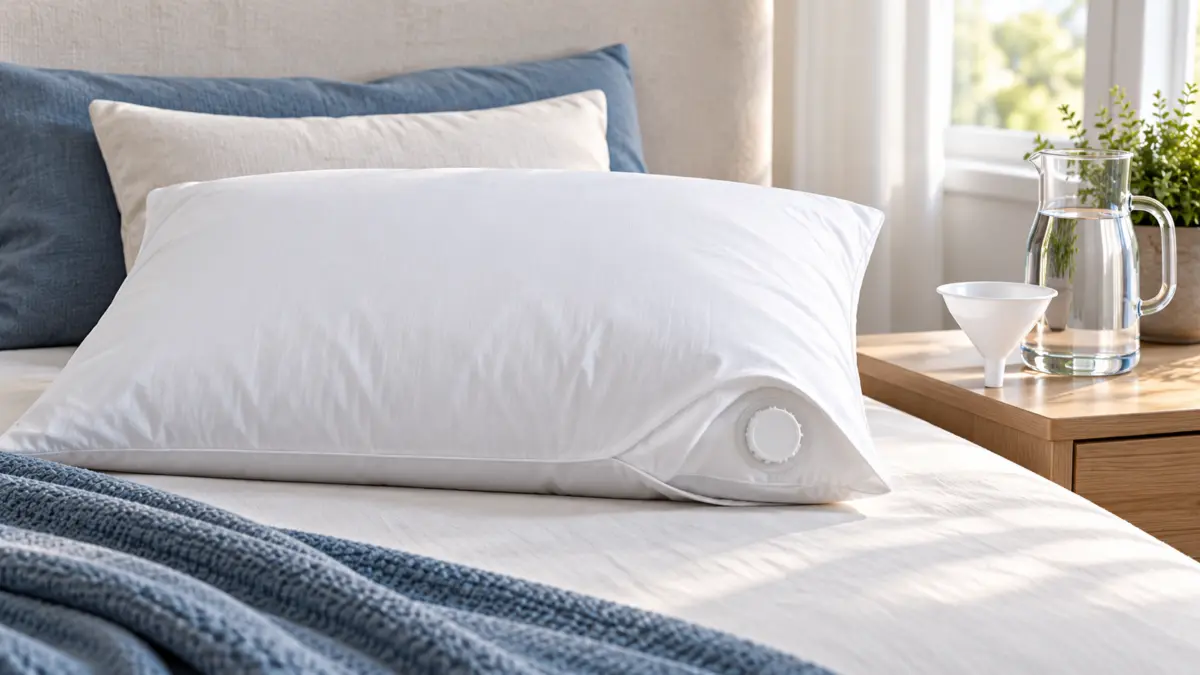
A water pillow combines a refillable water pouch with a separate sleeping surface, usually made from another filling. You adjust the water inside the pouch; you do not soak the pillow itself. Getting it comfortable involves more than choosing a number of cups.
Start with the instructions for your exact model, then check water volume, trapped air, and surface feel separately. A pillow that sounds sloshy, one that feels too high, and one whose top layer feels wrong may need different responses. Here is how to keep those decisions separate.
What is inside a water pillow?
The water is only one part of the construction. For example, Mediflow’s Elite Fiber has an insulated water pouch beneath a fiber layer, with a cotton shell. Its Original Memory Foam model uses ventilated memory foam over the water support layer instead.
That distinction matters when shopping. Changing the amount of water adjusts the base, but it does not turn a fiber surface into memory foam. Two water pillows can therefore offer different contact sensations even when you put the same volume in each.
Before buying, identify the upper filling, the parts you can remove, and the care instructions. If you prefer a different adjustment mechanism, our guide to adjusting loose fill and removable inserts explains those alternatives.
Set up the model you actually own
Find the model name and its instruction sheet before filling. Check the specified water temperature, suggested starting amount, capacity limit, and closure method. A maximum capacity is a limit, not a target for everyone.
The Chiroflow U.S. filling guide illustrates this sequence:
- Prepare the pillow and filling tool. Support it upright as the diagram shows and measure the water you add.
- Remove the trapped air. Locate the water level, gently flatten the pouch above it, and move the air toward the opening.
- Close it as directed. Follow the guide’s cap and tool instructions rather than guessing how to secure the opening.
- Place it correctly. That guide puts the water base underneath and the filled sleeping surface on top.
Use your own model’s directions if they differ. If you spill water onto the exterior, let the pillow dry completely before use; Chiroflow explicitly warns against using it damp.
Then put it in its intended case on your usual mattress. Our guide to checking whether a pillow is too high or too low can help you describe the support you feel before changing the volume.
Liters and U.S. quarts are not identical
Some filling charts place liters and quarts together as approximate guides. Keep track of which unit your jug actually measures.
The NIST conversion table gives one U.S. liquid quart as approximately 0.946 liters. That makes three U.S. liquid quarts about 2.84 liters, not 3 liters. This is a unit conversion, not a recommended starting fill or a claim that the difference has a proven effect on comfort.
Use one unit consistently when recording changes. If the manual leaves the capacity or unit unclear, ask the manufacturer before filling to the limit.
What to check before adding more water
Describe the problem first. “I hear water when I turn my head” is more useful than “this pillow needs adjusting.” Mediflow’s air-removal guidance asks you to check with the pillow on the bed and your head resting on it, and associates water noise in that situation with remaining air. Shaking it in your hands is a different observation.
This checklist brings the separate decisions together. It is an editorial aid, not a product test or a way to diagnose discomfort.
| What you notice | What to check | Before changing anything |
|---|---|---|
| The support feels too high, low, or resistant | The recorded water amount and intended setup. | Check the model’s adjustment guidance and describe height and resistance separately. |
| You hear water while resting on it | Trapped air and the maker’s air-removal procedure. | Do not assume that noise means you should add more water or that the pouch is leaking. |
| You dislike the surface against your head | The upper filling and cover. | Decide whether you are trying to change the base or the feel of the material above it. |
| The pillow needs cleaning | The care label for each component. | Separate washing the textiles from draining or refreshing the water. |
Keep a short note: model and manual version; measuring unit; starting volume; amount added or removed; what felt or sounded different. Keep the case and mattress the same while comparing a permitted adjustment. If you lose track of the amount, mark it unknown rather than inventing a starting point.
Keep water changes and textile care separate
Draining the pouch does not automatically make every other part machine washable. Mediflow’s care instructions distinguish fiber and down versions from memory foam versions. For the latter, they tell owners to remove the foam insert and wash only the cover after draining the water.
If your pillow has a solid foam component, our solid memory foam cleaning guide explains why the core and cover need separate treatment. Always match those general distinctions to your model’s label.
Check the document version, too. Chiroflow’s older washing FAQ describes a no-heat dryer option, whereas the filling sheet currently linked on its U.S. site says to hang dry. If your label and online instructions disagree, ask which applies to your pillow before choosing a method.
Mediflow recommends changing its pillows’ water every six months to one year, without leaving it longer than a year. That is a schedule for the liquid, not permission to leave the pillowcase unwashed for that long. Record the refill date separately from your normal bedding care.
Does the water keep the pillow cool?
Do not buy it on that assumption alone. In its explanation of water-pillow construction, Mediflow describes an insulating layer between the pouch and the upper filling, and says the water does not make its pillow inherently cooler than conventional pillows.
That is the manufacturer’s explanation of its design, not an independent overnight temperature test. Check the cover and upper material as well as any specific evidence behind a cooling claim.
What does the neck-pain research actually show?
A frequently cited 1997 study compared three pillow conditions in 41 people over five weeks. The water-based pillow performed better on some measures, including morning pain and reported sleep quality. It did not establish that every water pillow works better for everyone.
The published study also reports manufacturer support. It tested a particular construction over a short period, used participants’ daily reports, and placed the usual-pillow condition first. Those details matter when a modern product page presents the findings as a broad promise.
Choose a pillow you can set up, maintain, and use comfortably. Stop using a setup that worsens discomfort, and seek professional advice for persistent pain rather than treating more water as a remedy.
Documentation checked October 29, 2026. BestPillows has not physically tested the products discussed. The checklist is our editorial synthesis; manufacturer instructions apply to the specified model and version.