

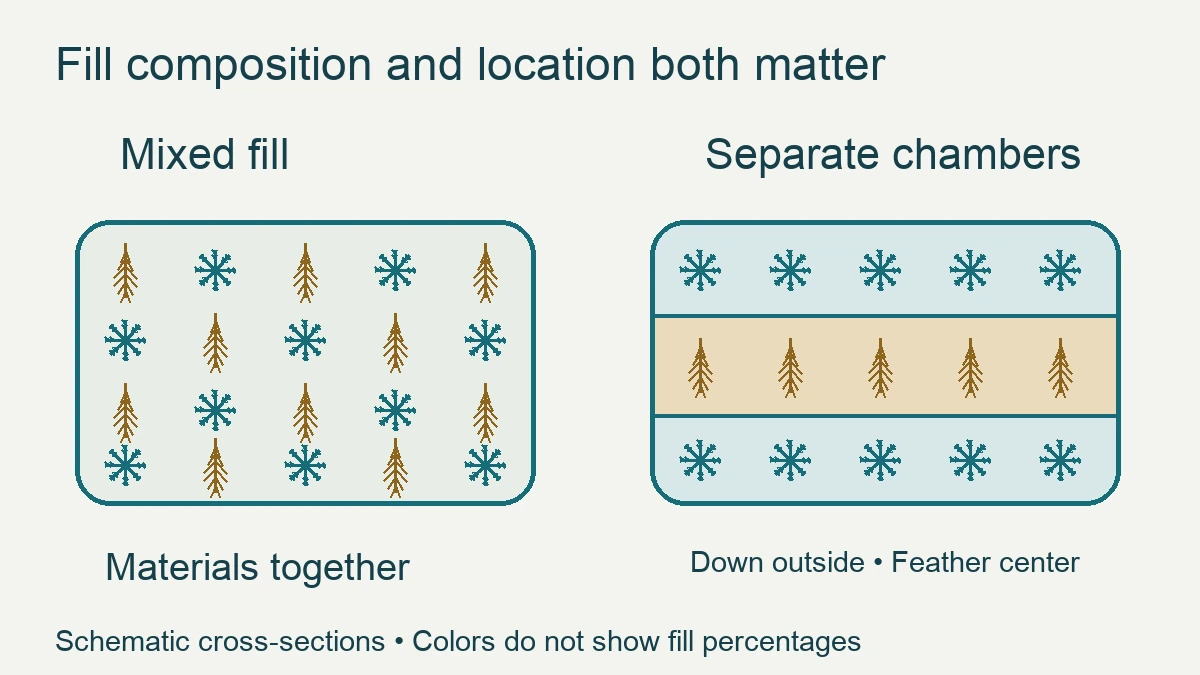
A pillow can contain both down and feathers without having the same mixture throughout. Some designs put feathers in a central chamber and down around it. That construction matters when you are comparing two listings that both say “down pillow.”
Before comparing prices, check what the fill is made of and where each material sits inside the pillow. The first tells you the ingredients; the second helps explain the design. Neither answer, by itself, tells you how comfortable the pillow will feel to you.
Down clusters and feathers are different structures
Plumeria Bay’s material guide describes down as a soft, three-dimensional cluster without the quill found in a feather. Feathers have a central quill and can create a more densely packed feel. Those differences explain why the two materials are used differently, but “down” is not a single firmness level: the brand also offers down pillows in different firmnesses.
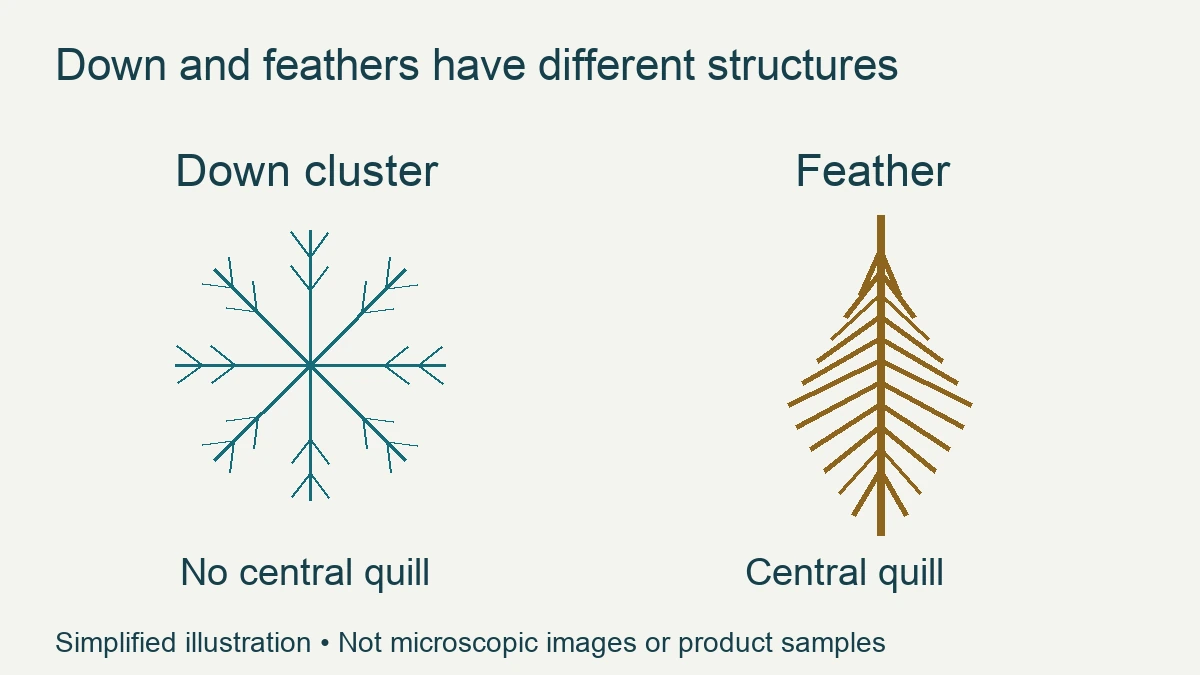
If you dislike the idea of feather quills, look for the actual composition rather than assuming a fluffy product photograph means the pillow contains only down. If you want a denser feel, compare the specified firmness and construction instead of assuming every feather pillow will feel the same.
A blend is not necessarily a chambered pillow
“Blend” describes the presence of more than one material. “Chambered” describes how the pillow is divided. A fill percentage does not show you a cross-section: unless the manufacturer explains the construction, it may not tell you whether materials are mixed together or placed in separate sections.
The featured schematic contrasts those arrangements. The separated example has two outer layers and a center, the three-chamber arrangement illustrated here. Its colors are a visual key, not measured amounts of down or feathers.
Two manufacturer examples worth reading beyond the title
Pacific Coast’s 3 Chamber Feather DownAround pillow is described with feathers in the inner chamber and down outside it. Its summary specifications list the fill material as “Feather,” while the longer description explains the down layer as well. Reading only the summary field would miss part of the construction.
Brooklinen’s pillow guide describes its Medium and Firm options as dual-core builds; it identifies the Firm option as a blend of down clusters and feathers. That is a useful reminder to check the chosen firmness option, not just the product-family name. Do not assume a description of one option applies to every version in the listing.
These are documentary examples, not recommendations or results from BestPillows sleep tests. An outer down layer does not establish how much the finished pillow will compress under your head.
What to check before choosing
Read the fill composition, any construction diagram, and the details for your selected size and firmness together. If a percentage is supplied, check what it describes: the whole pillow, one chamber, or a particular blend. If that scope is unclear, ask the seller before treating two percentages as directly comparable.
Keep a short comparison note for each finalist:
- Materials: down, feathers, or both; record any published percentages with their stated scope.
- Arrangement: mixed fill, separate chambers, or not explained.
- Selected version: size and firmness, with fill weight if the maker provides it.
- Practical terms: the exact care instructions and the conditions for trying or returning the pillow.
A missing detail should stay marked “not stated.” Do not infer a percentage from a diagram, or translate “premium” into a measurable amount of down. If one seller explains the chambers and another does not, that is a difference in available documentation—not proof that the second pillow has inferior construction.
Use the material and chamber information to narrow your choices, then assess the finished pillow under the seller’s applicable trial terms. A soft outer layer and a denser center can coexist; the words “down” and “feather” alone cannot predict your preferred feel.
Manufacturer documentation checked October 1, 2026. Product composition and available versions may change. BestPillows has not physically tested these pillows.