

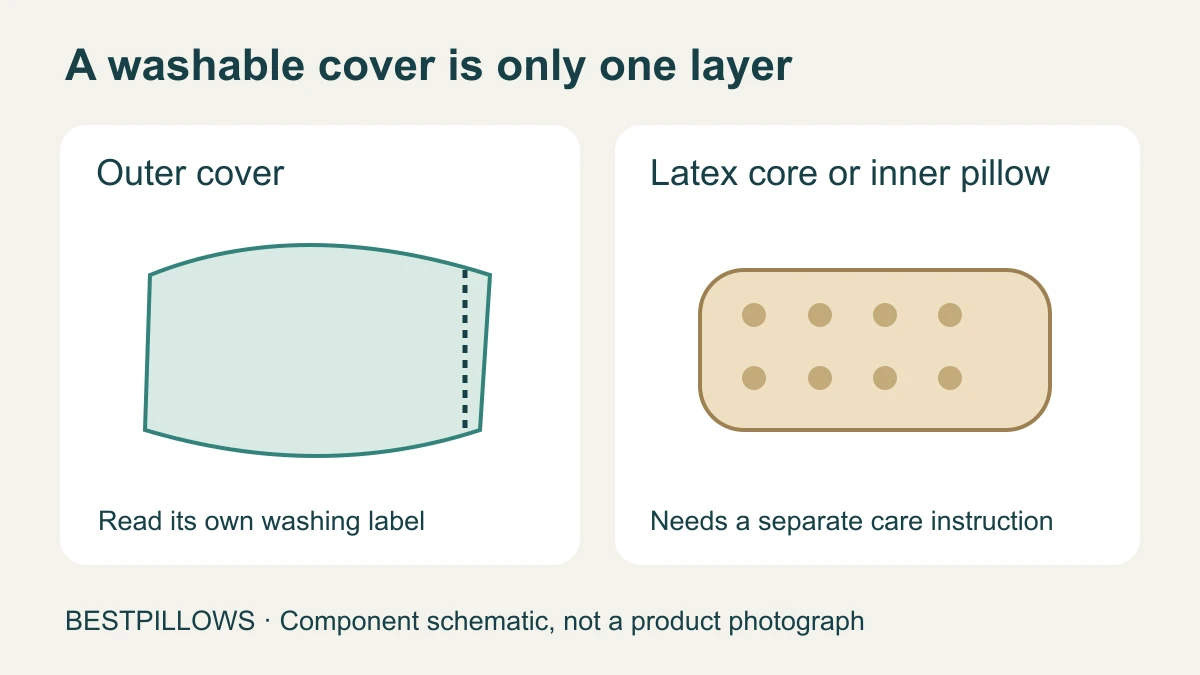
A latex pillow may have a washable cover and a core that must stay out of the washer. Some manufacturers also permit washing a complete shredded-latex pillow. The instruction for your exact model and component decides what you can clean. Neither “natural latex” nor “shredded” settles the question.
Before choosing a cleaning method, remove only the parts that the manufacturer says are removable. Match the name on the pillow or order record to its care instructions. If you cannot identify the model, do not start by soaking the core.
Three latex pillows with different cleaning permissions
These examples show why a generic latex washing recipe can fail. They compare manufacturer documentation; BestPillows has not washed or tested these products. Your sewn-in label and instructions for your version take priority.
| Pillow | What the maker permits | What to keep separate |
|---|---|---|
| Saatva Latex Pillow | Machine washing the cover and microdenier fiber pillow after removing the latex core. | Saatva expressly says not to wash the shredded natural latex core. |
| Coop Latex | Separate washing of the removable cover; the inner pillow is spot-clean only. | Cover directions do not permit washing the interior. |
| PureTree latex pillows, brand FAQ | The exterior case or the complete pillow may be washed. For the complete pillow, PureTree calls for both casings zipped, a large garment bag, an HE washer with cold water, and low tumble drying. | That permission applies to the products covered by PureTree’s instructions, not other latex pillows. |
The Saatva example has another filled component around its removable core. The word “pillow” in its washing instructions does not mean that every piece goes into the machine together. With the other examples, the dividing line is different: Coop restricts the interior to spot cleaning, while PureTree describes a complete-pillow wash.
Make a component list before getting anything wet
On a clean, dry surface, identify the separate pillowcase, any removable outer cover, the inner shell or liner, and the latex inside. Some pillows have a molded block; others have loose pieces in a shell. A zipper may allow a cover change or a fill adjustment without allowing the material to be washed.
Write down one instruction for each part you intend to clean. “Machine-washable cover” leaves the core instruction unanswered. “Spot-clean only” is also a complete restriction; it is not permission to submerge the whole inner pillow and call that hand washing.
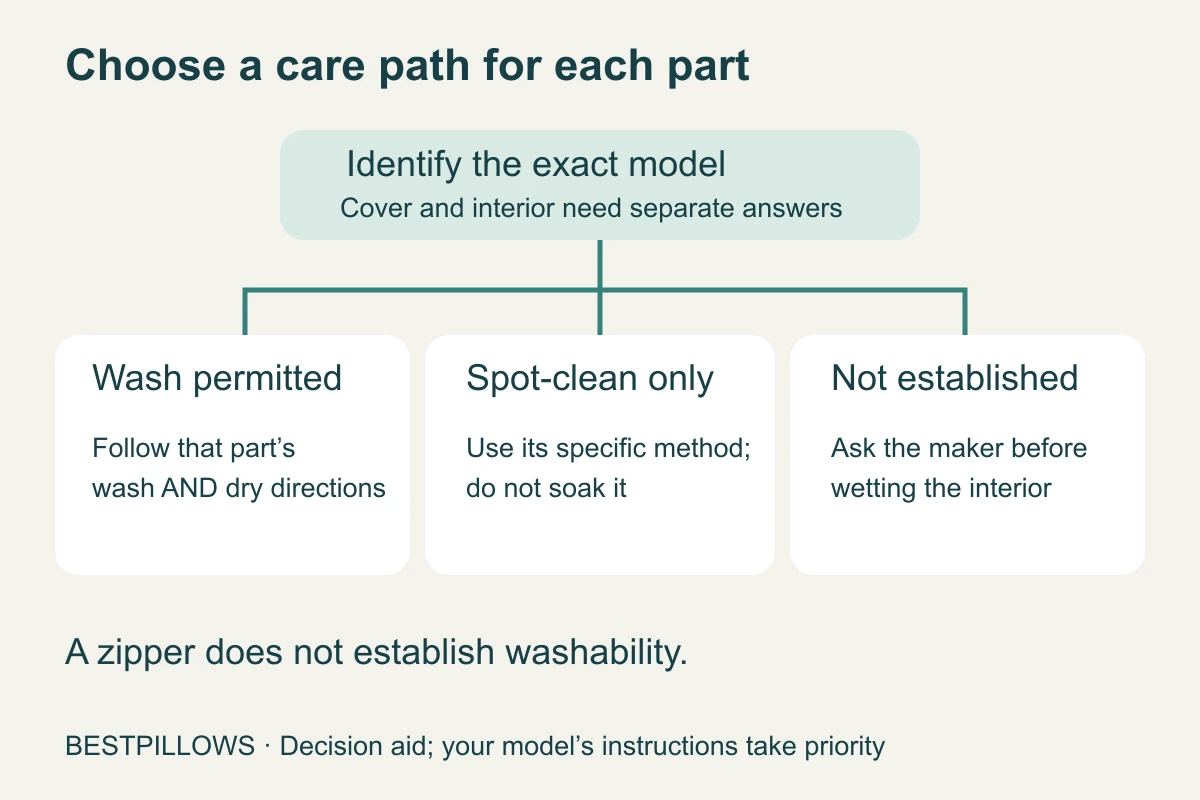
If the label and the current website differ, ask the maker which applies to your version. Include the model name and a photo of the labels; an approximate purchase date can help identify an older design. Keep the interior out of water while that question is unresolved.
When only the cover needs cleaning
Separate it from the inner pillow as directed, then follow its own wash and drying label. Keep the dry core away from the laundry area so that a washable cover does not accidentally carry it into the machine.
Do not transfer a cover temperature to the core. Likewise, instructions for unpacking or expanding a new pillow are not a cleaning cycle. Coop’s Latex care page, for example, lists a before-use dryer step separately from its spot-clean-only interior instruction.
Check that the cover is dry before reassembly. If it is now difficult to close or pulls the pillow into a different shape, recheck the component and its care history before forcing the zipper. Our pillowcase fit guide explains how an additional case can change the finished fit too.
When the inner pillow needs attention
For a spot-clean-only interior, use the manufacturer’s actual spot-cleaning procedure. If the page gives only the restriction and no method—as Coop’s Latex section does—ask for directions before borrowing a sponge, detergent, heat setting, or drying technique from another model.
For an expressly washable complete pillow, read the wash and drying directions together before starting. Keep casings, closures and protective laundry bags arranged exactly as the instructions require. Do not empty loose latex into the washer merely because you can unzip the shell to adjust it.
Memory foam requires its own check. For a formed core, see how to care for a solid memory foam pillow and its cover. Our shredded memory foam washing guide documents different permissions even within one brand. A cleaning method for that material does not establish a method for latex, or vice versa.
If you already washed it without a clear instruction
Do not put a damp interior back into a dry cover or return it to bed. Contact the manufacturer with the model, label and the wash settings you used. Ask for a drying or assessment procedure for that exact construction. Raising the heat or wringing the core is not a substitute for missing instructions.
A changed shape, persistent odor, or damaged shell needs that follow-up as well. This comparison cannot establish that an incorrectly washed core is recoverable. For the next cleaning, keep the component list with the care directions so that you can repeat the permitted process without starting the search again.
Manufacturer documentation checked October 2, 2026. Diagrams and the component-check procedure are BestPillows editorial work, not physical product tests. Product versions and instructions may change.