

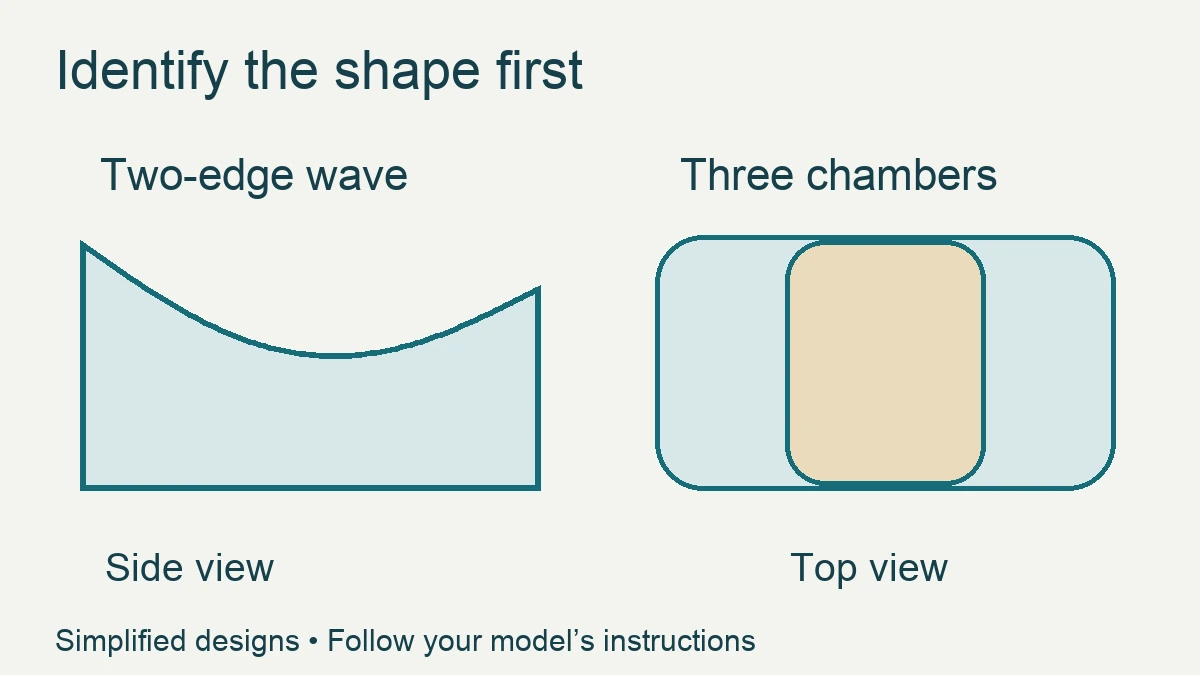
Start with your pillow’s shape and its setup instructions. “Put the high side under your neck” can be a useful direction for one model and an incomplete answer for another. A wave-shaped foam pillow and a pillow with separate head chambers do not put a side sleeper’s head in the same place.
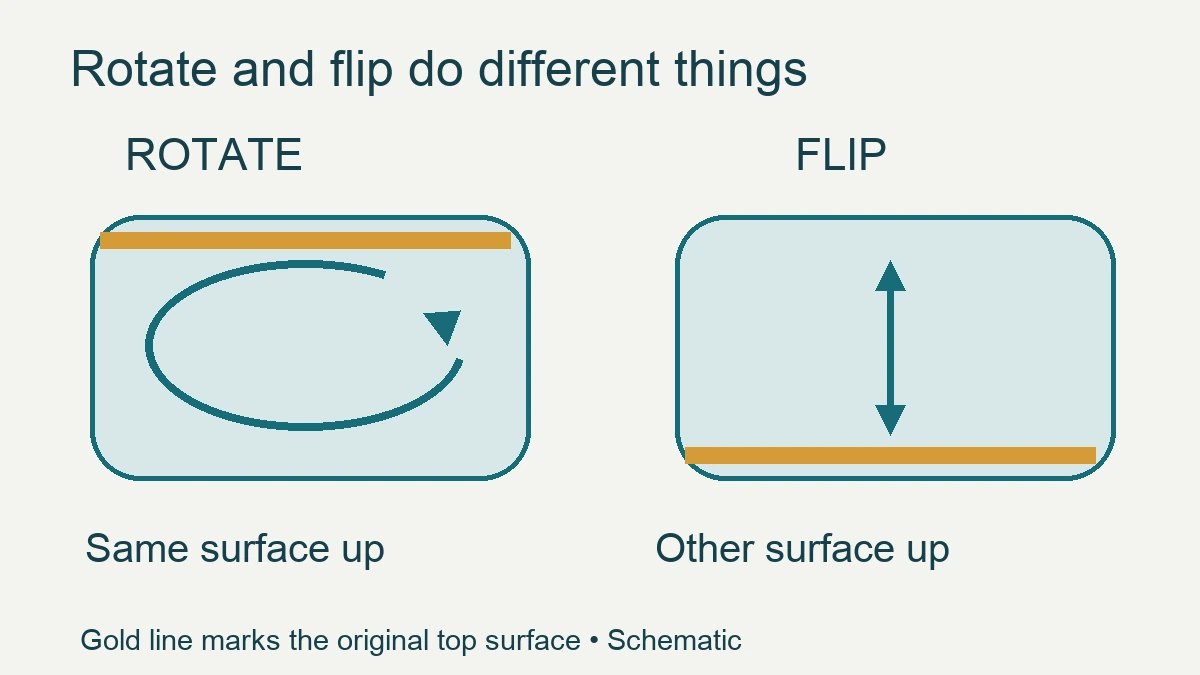
There are two different questions to resolve: which surface faces up, and which edge faces your neck. Rotating a pillow on the mattress changes the edge you use; flipping it over changes the sleeping surface. Do not treat those as interchangeable unless the maker says both surfaces are intended for sleeping.
Two designs, two starting points
The featured diagram shows simplified shapes to help you identify a design. It is not a product photograph or an anatomical alignment test. Read the instructions for your exact pillow before copying a position from a similar-looking one.
A wave with two raised edges
IKEA’s ROSENSKÄRM U.S. instructions say to use the higher part for side sleeping and the lower part for back sleeping. For people who change positions, IKEA suggests turning it around to find the preferred side. That is guidance for this model, not a rule that the higher edge is always right on every contour pillow.
On a design like this, identify the intended top surface first, then turn the pillow end for end on the mattress to bring the other long edge toward you. Do not infer that turning it around means sleeping on the flat underside.
Raised side chambers and a lower center
SpineAlign’s product and setup guide places side sleepers on an outer chamber and back sleepers in the center cradle, with the raised edge under the neck. Its long edges offer different heights, and the maker treats edge choice as a starting point that also depends on build, mattress, and preference. In this design, always putting your head in the middle would miss the side-sleeping instruction.
These examples explain why a universal “high side or low side?” answer is not enough. One pillow asks you to choose a ridge; another also asks you to choose a chamber.
Set it up on the mattress you use
Put the correct cover on before checking the fit. Lie down in the position you actually want to use, placing your head where the manufacturer directs it. For the SpineAlign side-sleeping setup, the shoulder stays on the mattress beside the pillow. Do not move your shoulder onto a raised chamber simply to make the pillow feel shorter.
Notice whether the chosen edge feels comfortable without forcing your head into position. If you switch between side and back sleeping, check both positions rather than judging only the one in which you first lie down. This is a practical comfort check, not a measurement that diagnoses a neck condition.
Change one thing at a time. Try the other permitted edge first. If the pillow has adjustable chambers and the manufacturer allows fill changes, make a small adjustment to the chamber you use, keep the removed fill, and check again. With a fixed foam core, do not cut or alter the foam to create a different ridge height.
When the case is changing the shape
A case pulled taut across the center hollow can make a contour behave differently. Before changing the fill, check whether the cover or extra pillowcase is flattening the ridges or pulling the corners together. For example, SpineAlign recommends a roomy king-size case to preserve its contours. Use your own pillow maker’s case recommendation rather than choosing solely by the pillow’s listed width.
For a rectangular case, our pillowcase fit guide explains how to separate listed dimensions from the body and closure you can actually use. It does not replace the case recommendation for a specific contour model.
If neither direction feels comfortable
Recheck the model name, sleeping surface, edge, head position, and case before making more adjustments. If the instructions are unclear, ask the manufacturer for a setup diagram for your version. “Contour pillow” is a broad description, not a shared instruction manual.
Stop using a setup that causes discomfort rather than forcing yourself to adapt to it. Persistent pain, numbness, or other symptoms are reasons to seek advice from a qualified healthcare professional. This guide explains product setup; it does not recommend a pillow as treatment.
Manufacturer setup instructions checked October 1, 2026. BestPillows has not conducted physical sleep or alignment tests on these products.