

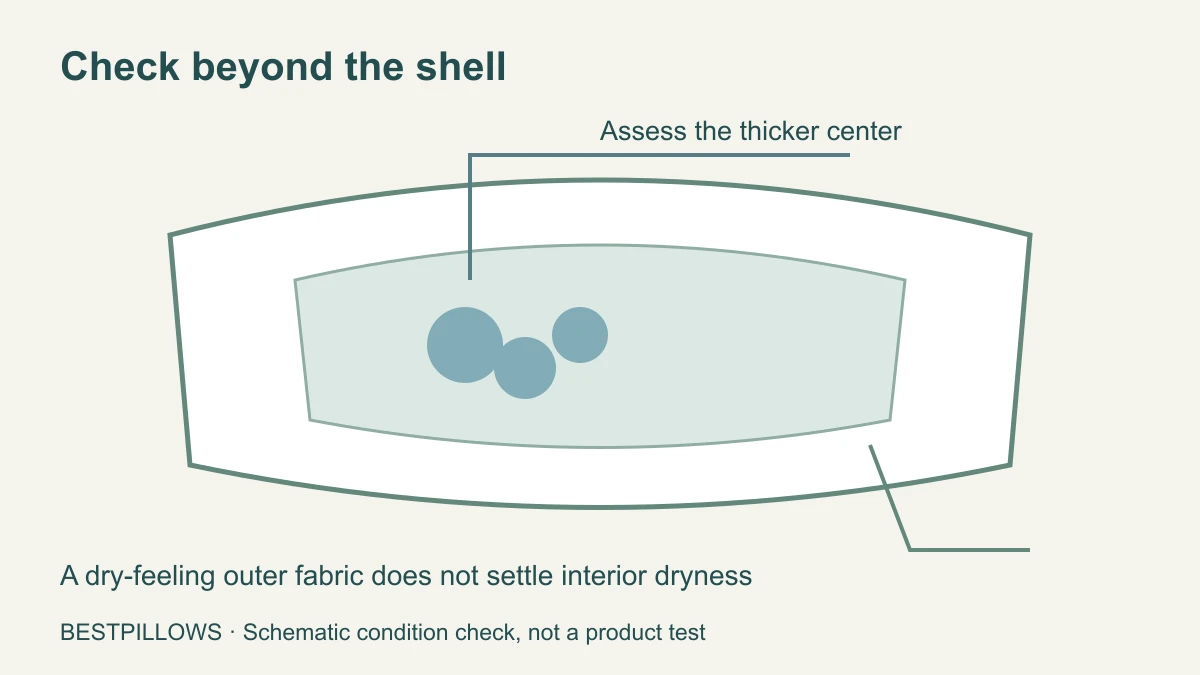
After an approved wash, dry a down pillow using the setting permitted for that exact pillow. Check the interior before putting it back in its case: a dry-feeling shell can leave the condition of the center unresolved. If the fill remains damp or clumped, do not solve the problem by borrowing a hotter setting from another brand.
This guide covers the drying stage for washable down and down/feather pillows. It does not establish that an unidentified pillow can be washed, and it does not apply to memory foam or latex. Read the care label before starting laundry, including the drying instruction.
Why the dryer setting needs a model check
Manufacturer pages do not agree on one universal heat setting. The difference is substantial enough that combining their recipes would give a misleading instruction.
| Source | Drying direction on the page | How to use this information |
|---|---|---|
| Pacific Coast laundry care | Low, air fluff or no heat, as directed; avoid high heat. | Its standard-pillow guidance defers to the sewn-in label and product-specific directions. |
| Yves Delorme US care guide | Low heat or the dryer’s air-dry setting, with periodic fluffing. | Check the pillow’s instructions before using this general natural-fill guidance. |
| DOWNLITE troubleshooting article | Its damaged-pillow rescue discussion recommends high heat and multiple cycles. | This conflicting brand-blog advice is not permission to override another pillow’s low-heat label. |
If your label and the maker’s website conflict, ask which instruction applies to your version. Send the model name and a photo of the label. Do not average the settings or assume that all natural fill can tolerate the same treatment.
Pause the cycle to assess the pillow
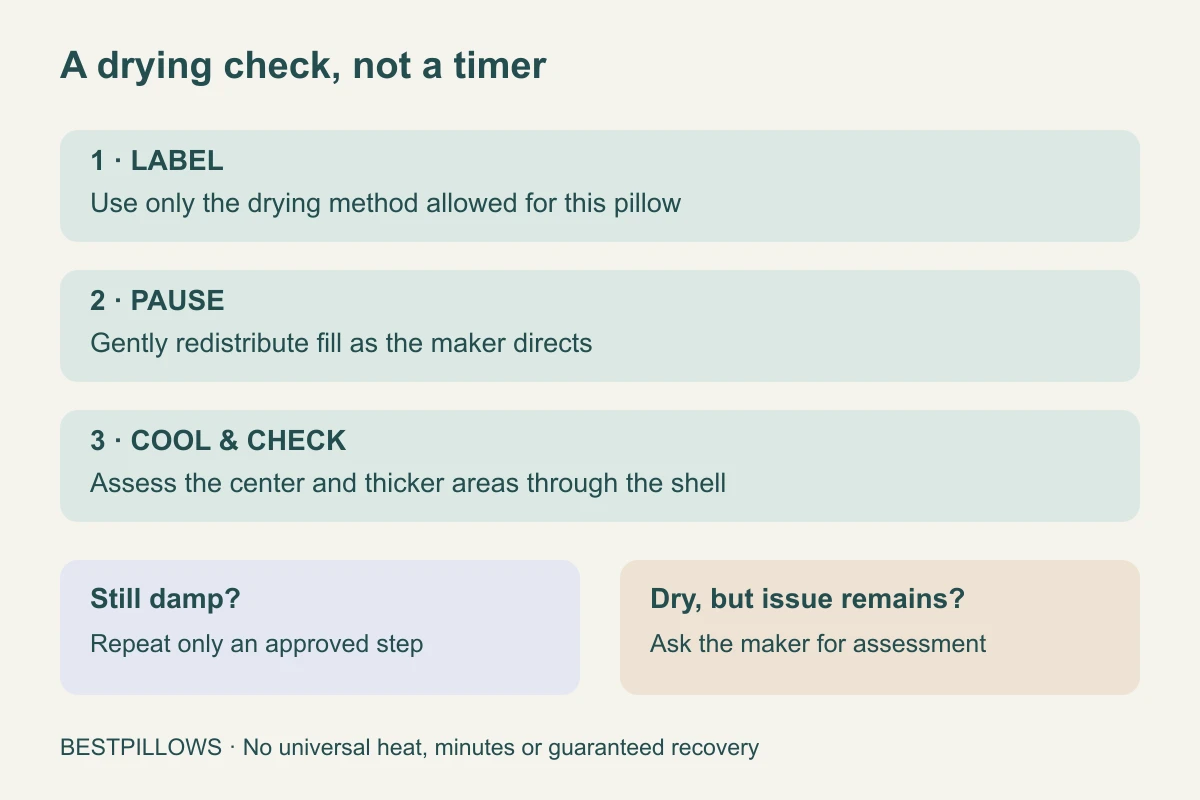
Keep the case and any separate protector off during an approved pillow-drying process. They have their own care instructions and should not conceal the shell while you assess the pillow. Before handling a wet pillow, check for a damaged seam or escaping fill; stop if the shell is failing.
Use the permitted dryer setting, then pause as directed to redistribute the contents gently. Yves Delorme describes clean tennis balls or wool dryer balls as aids for its process. They are optional equipment to confirm against your own instructions, not a substitute for drying the interior or a universal treatment for every pillow material.
Let the pillow cool before deciding that it is ready. Warmth can make a comparison difficult. Press through the shell at the center and other thicker areas, checking for cool damp patches or wet clumps rather than inspecting only the corners. The Pacific Coast down-pillow wash guide describes this cooling and center check.
Clumps and odor belong in the same assessment
If the center is damp, continue only the approved drying process. If it is fully dry but the filling remains uneven, gently redistribute it as the manufacturer directs. Keep the shell closed unless the pillow is designed for adjustment; opening a seam to pull out wet filling introduces a separate repair problem.
Do not use smell as a diagnosis of what has happened inside the pillow. An unusual odor needs a check alongside moisture and condition. If it remains after the center is dry, or the pillow will not recover normally, contact the maker rather than adding fragrances, vinegar, or an unapproved wash to hide it. Cleaning cannot guarantee that a damaged pillow returns to its previous loft or feel.
For a pillow with separate chambers, a single soft corner also does not describe the entire interior. Our down and feather construction guide explains why a mixed fill and a chambered design are different constructions. Check the thicker portions without tearing at the seams.
Finish by separating pillow care from cover care
Reassemble the bedding only when the pillow and each removable layer are dry. If a freshly laundered cover now squeezes the pillow or strains its closure, check the fit before forcing it on; the pillowcase fit guide walks through that comparison.
Record the model and the settings you used with its care instructions. That makes the next wash easier to plan and gives customer support useful information if clumps, odor, or a damaged seam remain. A generic number of minutes cannot replace the label and the condition check.
This is a comparison of manufacturer documentation, checked October 2, 2026, with original BestPillows diagrams. We did not wash or test these products. Follow instructions for the exact pillow and equipment you own.