

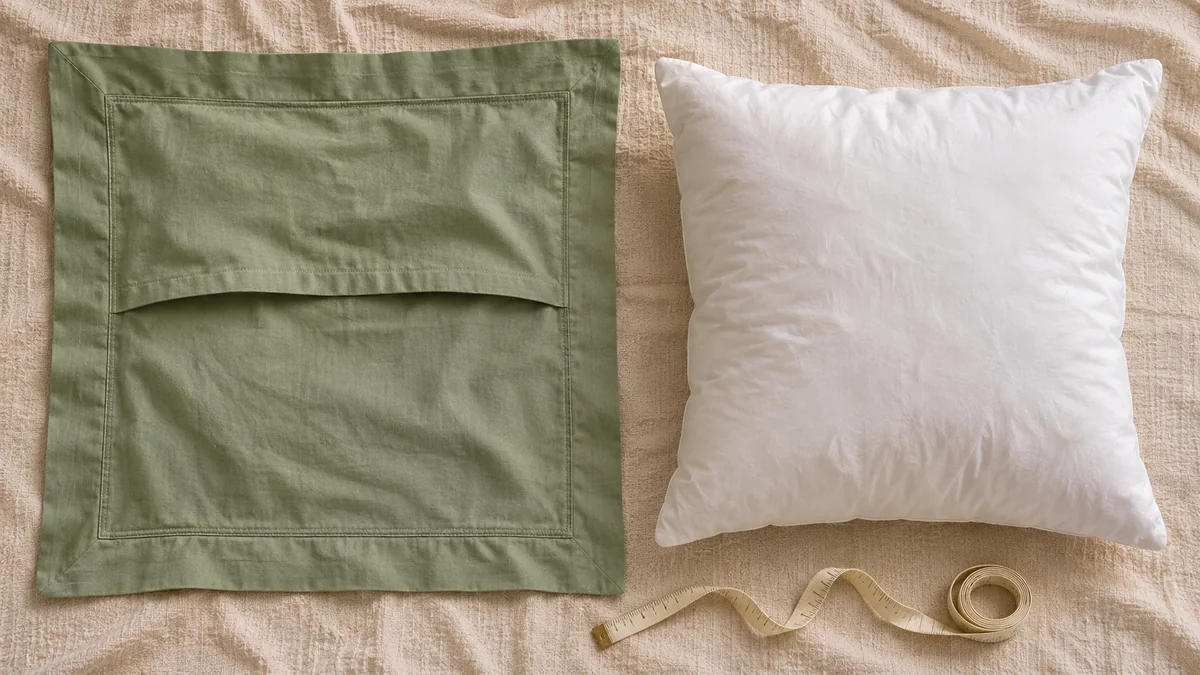
For a U.S. Euro sham, a 26 × 26-inch square insert is a common starting point. Buy that size when the maker says the sham fits it, even if the cover measures 28 inches across the front. A strip of fabric sewn around the pocket can account for those extra inches. Buying a 28-inch insert to match the outside edge can leave you wrestling with a closure that was cut for a smaller pillow.
If you already own the sham, the quickest way to decide is to turn it over. Find where the pillow goes in, feel for the four seams that stop it moving farther, and measure between those seams. Keep that number separate from the overall width when you compare inserts.
What does “26 inches” measure?
Three different objects can carry that measurement: the empty cover, the pocket inside it and the insert’s fabric shell before filling. A listing that says “fits a 26-inch insert” answers the buying question directly. A listing that gives only “26 inches, finished” still leaves a question about the border.
Take two real examples. Elegant Strand’s Euro sizing guide pairs its 28-inch finished square sham with a 26-inch insert. The guide explains that the extra inch on each side belongs to the border. Its quilted shams are instead listed by the size of pillow they fit. Even within one brand, the label can describe a different measurement.
Peacock Alley’s Hamilton sham lists a 26 × 26-inch Euro option, a two-inch flange on all four sides and a centered envelope opening. Those are three useful details. The dimension line alone does not say to deduct four inches or order a larger insert. If you are shopping for that exact piece and need the pocket measurement, ask which insert the maker pairs with it.
Measure a sham you already own
- Empty the sham and lay it flat with the opening facing up. Smooth it gently. Stretching the cloth can give you more room on paper than you will have once the pillow is inside.
- Slide a hand through the opening and trace the pocket to each corner. A flange is a flat fabric rim beyond the pocket seam. Some borders are purely decorative stitching on the face, so feel from inside before deciding where the pocket ends.
- Measure across the pocket between its side seams, then from top seam to bottom seam. Record both numbers. Measure the outside edges separately if you also need to know how much space the sham occupies against the headboard.
- Check the entrance. On an envelope back, the two panels overlap to cover the insert. On a zippered back, the opening may stop short of the corners. The opening helps you judge how easily an insert goes in, but its length is a different measurement from the pocket width.
For example, suppose your tape reads 28 inches across the whole sham and 26 inches between the seams in both directions. Write down “26-inch pocket, 28-inch outside.” If a seller asks for the cover size, give both numbers and explain where you measured. That one line is more useful than a photo of the sham beside a ruler with no seams in view.
When does a larger insert make sense?
Upsizing is a styling choice for some covers. Vero Linens’ guide to filling shams distinguishes a softer look with a matching insert from the fuller look it aims for by sizing up. Elegant Strand gives a specific same-size pocket recommendation for its own construction. Use the instructions for the cover in your hands first. A suggestion for making a loose cover look fuller has little bearing on a tightly quilted cover whose back is already pulling open.
Also check how the insert maker quotes dimensions. Aloriam explains its insert measurements using the flat seams of a knife-edge shell before filling. When the filling rounds out the shell, the pillow can look narrower from the front. Measuring straight across the face of a puffed insert and rounding down can send you shopping for a size you already own. If you are comparing other constructions, our guide to gusseted pillows shows what a side panel adds to the measurements.
Try the fit before replacing either piece
Start with the far corners. Guide each corner of a compressible insert into its matching pocket corner, settle the remaining two, then let the fill spread before closing the back. On a zippered sham, hold fabric away from the teeth and stop if the slider meets resistance. Put the closed sham upright where you intend to use it. The front alone can hide strain at the back.
| What you see | What to try |
|---|---|
| One empty corner | Open the cover and guide the insert tip into that corner. If the other three are full, first check for a twisted corner or displaced filling. |
| All four corners look slack | Check both labels and redistribute movable fill. If the pocket and insert sizes agree and the back has room, ask about a fuller insert compatible with this cover. |
| Envelope parts or zipper pulls tight | Recenter the insert and check the overlap. If the back still strains, use the recommended size or a less bulky compatible insert before trying a larger one. |
| Only the border droops | Feel for the filled pocket behind it. An unfilled flange can fold while the four pocket corners fit well. Changing inserts solely to stiffen the rim can overfill the body. |
A rectangular sleeping pillow can be long enough along one side yet leave a strip of a square sham empty along the other. If your actual question is about using a rectangular case you already own, follow the measurements for a queen pillow in a standard pillowcase. For a Euro sham, the two pocket dimensions and the way the back closes are what decide whether you can keep the insert you have.
Manufacturer guides and product specifications reviewed November 6, 2026. The measurement example is illustrative. Product comparisons are based on documentation.