

Choose a pillow protector for the job you need it to do, then check that it fits without changing the pillow’s shape. A zipper, a cotton fabric label, and a waterproof claim describe different features. None of those words alone answers every protection question.
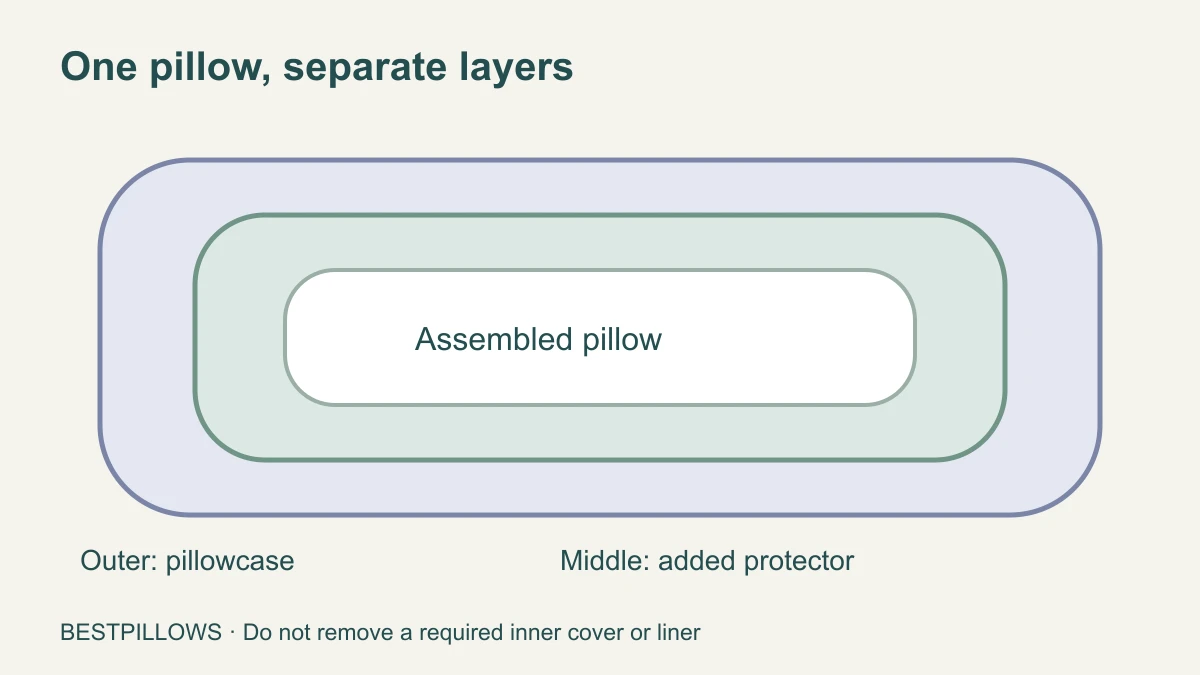
A separate protector usually goes around the pillow underneath the pillowcase. Some pillows already have a removable cover that belongs to their construction. Identify that cover before adding another layer; do not remove an integral liner or put loose fill directly into a protector.
What protection are you looking for?
If you mainly want an extra layer you can take off and launder, compare the fabric, closure and cleaning directions. A washable textile protector gives you a removable component to care for, but washability does not establish a liquid barrier.
If spills are the concern, look for an explicit waterproof claim for the exact model. Check the documented barrier construction, how the closure is meant to be used, and any care restrictions. “Water-resistant” and “waterproof” are not interchangeable descriptions, and neither is established by the word “cotton.”
If you are shopping for an allergen barrier, check the specific manufacturer claim and supporting product documentation. A zipped closure does not itself establish a tested barrier performance. Do not assume that buying a protector treats an allergy or guarantees symptom relief; this guide compares bedding features, not medical outcomes.
Two products that illustrate the distinction
The Company Store’s Cotton Pillow Protector is described as a cotton protector with a zipper. Its listed care calls for cold gentle washing and low tumble drying, without ironing. The listing does not establish waterproof performance. That makes it a useful example of why a fabric-and-closure description should not be silently upgraded to a spill-proof promise.
AllerEase Waterproof Allergy Protection Pillow Protector, sold through American Textile’s official store, expressly claims waterproof protection. The product information lists polyester with polyethylene and a zippered closure. Its care directions allow warm washing and low tumble drying with prompt removal, and prohibit ironing. Those directions differ from the cotton example; do not combine them into a single protector-care recipe.
The AllerEase brand comparison also distinguishes its waterproof pillow model from other protectors in the range. A claim on one model is not a feature of every item from the same brand. These examples are documentary comparisons, not rankings or BestPillows performance tests. We have not measured leakage, noise, cooling, or allergen filtration.
Check each layer before putting it on the bed
Start with the dimensions listed for your pillow and the protector’s actual size chart. Do not choose from the mattress size alone. Product naming can overlap: American Textile’s chart, for example, includes a standard/queen protector labeled 20 × 28 inches alongside separate standard and queen entries. The label name is a starting point, not a complete fit check.
Lay out the pillow in its normal shape and identify the covers that the manufacturer requires. Put the separate protector around that assembled pillow, settle the corners, and close it gently. The closure should work without forcing the zipper, pulling hard at a seam, or compressing the pillow just to make it shut.
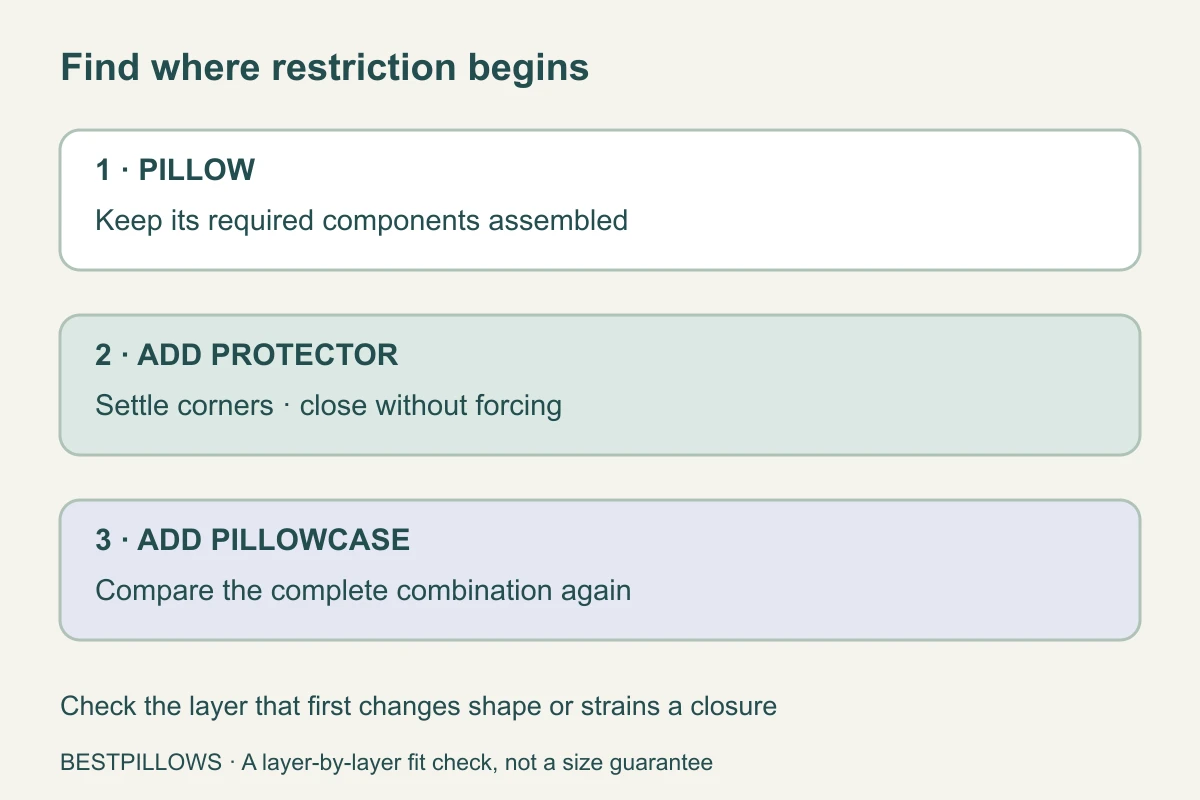
Next, add the pillowcase and compare again. If the protector alone fits but the complete combination feels tightly packed, the outer case may need more room. If restriction appears as soon as the protector is added, reassess that protector’s size and construction first. Our pillowcase fit guide explains flat measurements, closures and the limits of size names.
A protector that fits length and width can still change the surface feel. Before changing an adjustable pillow’s filling, compare the bedding layers so you know what changed. The adjustable pillow setup guide shows how to keep later fill changes reversible.
Keep the care instructions with the right layer
Read the protector’s wash and drying label separately from the pillow’s. Remove it for its own permitted cleaning, and make sure each layer is dry before reassembly. For a formed core, check our guide to solid memory foam pillow care. A washable protector does not make a foam interior washable; our shredded memory foam washing comparison documents that distinction.
If a closure fails, a seam splits, or the protector changes after laundering, check with its manufacturer before continuing to rely on its stated protection. An extra cover also does not repair a pillow’s damaged shell. Keep the model name, dimensions and care directions together so replacement shopping starts with the function and fit you actually need.
Product documentation checked October 2, 2026. Original BestPillows diagrams illustrate component order and fit checks. Product versions may change; the current label and instructions for your item take priority.